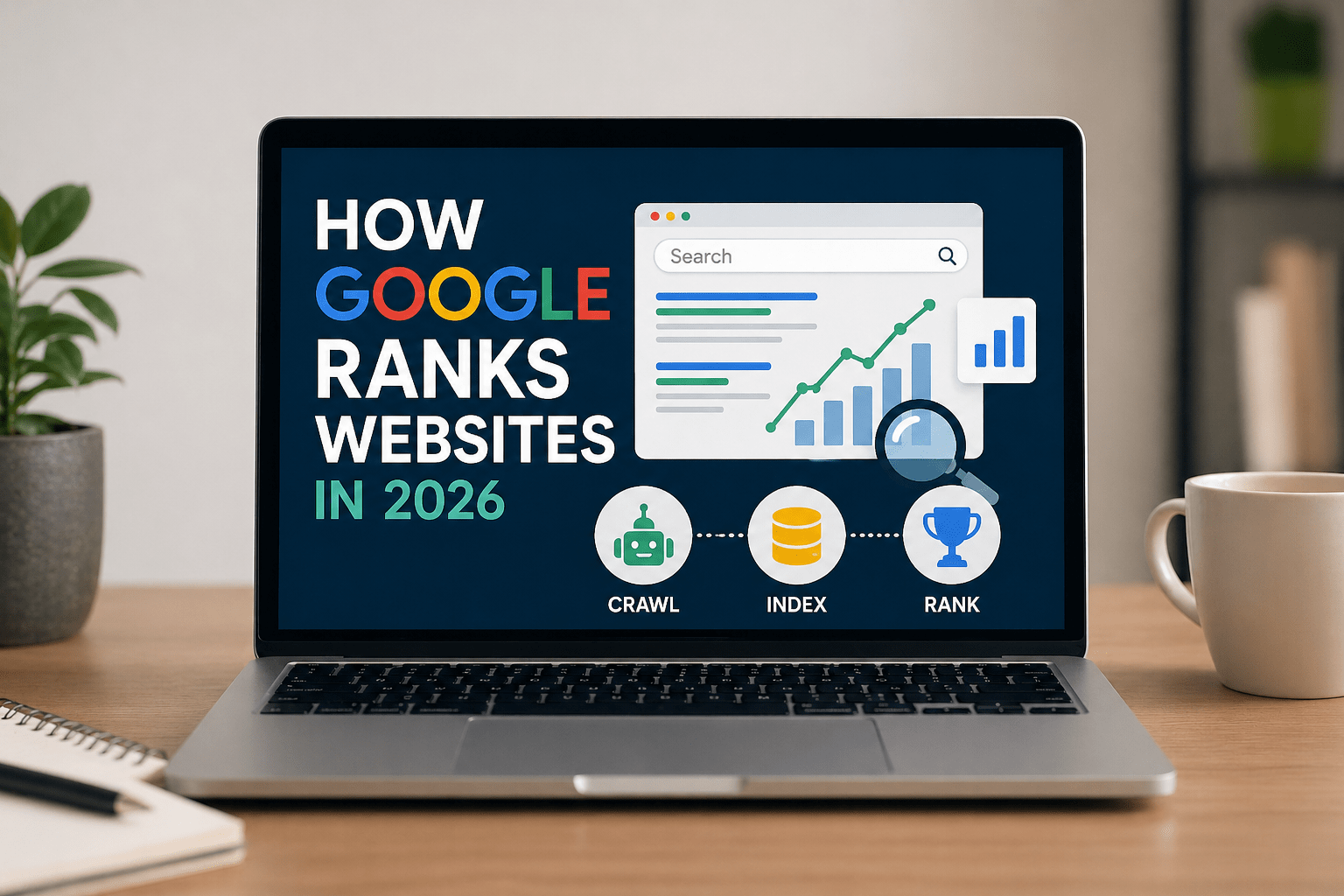
How Google Ranks Websites in 2026: What Actually Matters

You can write a great article… and still get zero traffic.

That’s the part most beginners don’t expect.

Ranking on Google isn’t just about writing. It’s about how your content is discovered, understood, and trusted.

If you want your website to appear in search results, you need to understand what’s happening behind the scenes.

If you’re new to SEO, it’s important to understand how search engines work before focusing on rankings

How Google Really Finds Your Content

Before your article can rank, Google needs to know it exists.

It uses automated bots to scan websites and follow links from one page to another.

If your content isn’t linked properly, it might stay invisible longer than you expect.

That’s why internal linking is not optional — it’s essential.
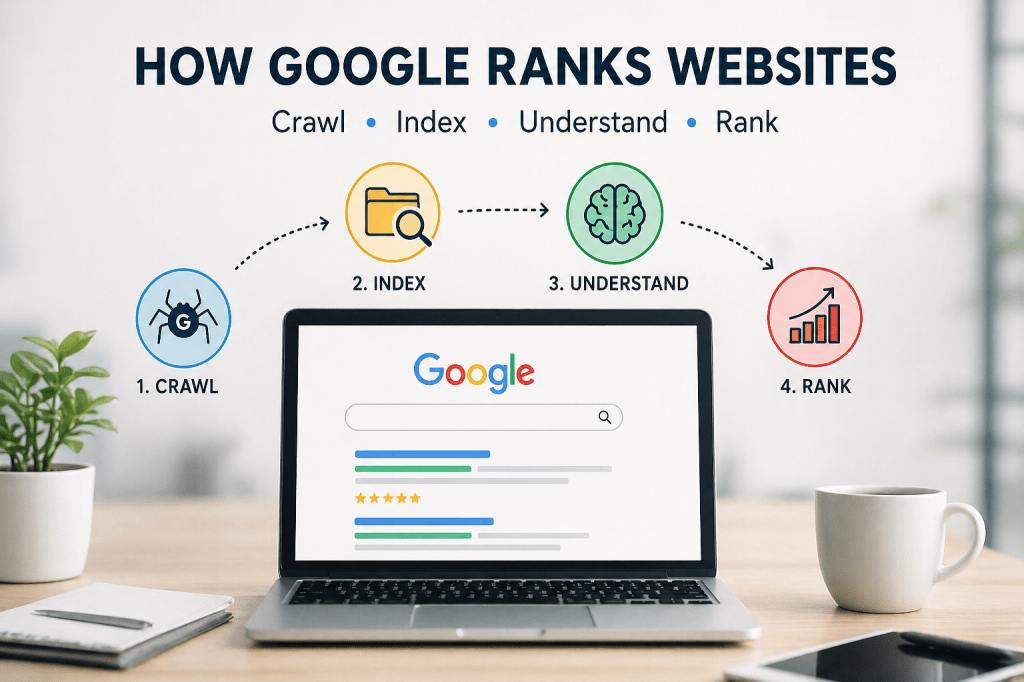

How Google Ranks Websites in 2026: What Actually Matters

Why Indexing Is Where Most New Sites Fail

Getting crawled doesn’t mean getting indexed.

Google reviews your page and decides if it’s worth storing in its system.

If your content is:

  • too short
  • unclear
  • or similar to other pages

…it may not be indexed at all.

And if it’s not indexed, it simply won’t show up.

Understanding What Your Content Is Really About

Google no longer relies on keywords alone.

It tries to understand the purpose of your page.

Ask yourself:

  • Who is this for?
  • What problem does it solve?
  • Is the answer clear and complete?

If your content doesn’t match what people are searching for, it won’t rank — even if it’s well written.

What Actually Affects Your Ranking Today

Content That Solves a Problem

Your article should answer a real question.

Not just explain a topic, but help the reader move forward.

Clear Structure

Messy content is hard to understand.

Use:

  • short paragraphs
  • clear headings
  • simple language

This makes it easier for both readers and search engines.

Trust and Credibility

Google prefers content that feels reliable.

This comes from:

  • consistency
  • accuracy
  • clear writing

Over time, your site builds trust.

Google evaluates trust using concepts like E-E-A-T, which you can understand in this guide.

User Experience

If your site is slow or hard to read, people leave.

That sends a signal to Google that your page isn’t helpful.

Why New Websites Struggle to Rank

This is something many people don’t talk about.

Even if your content is good, new websites need time.

Google needs to:

  • discover your pages
  • understand your content
  • trust your site

This doesn’t happen overnight.

Common Mistakes That Hurt Your Rankings

A lot of beginners make the same mistakes:

  • Writing without a clear goal
  • Ignoring internal linking
  • Targeting very competitive keywords
  • Publishing inconsistent content

Fixing these alone can make a big difference.

How to Improve Your Chances of Ranking

You don’t need complicated strategies.

Focus on the basics:

  • Write content that answers real questions
  • Keep your structure clean
  • Link your articles together
  • Stay consistent

Small improvements add up over time.

Google ranking isn’t random.

It’s a process.

When your content is clear, useful, and connected, it becomes easier for search engines to understand and rank it.

Start simple. Stay consistent.
That’s how growth happens.
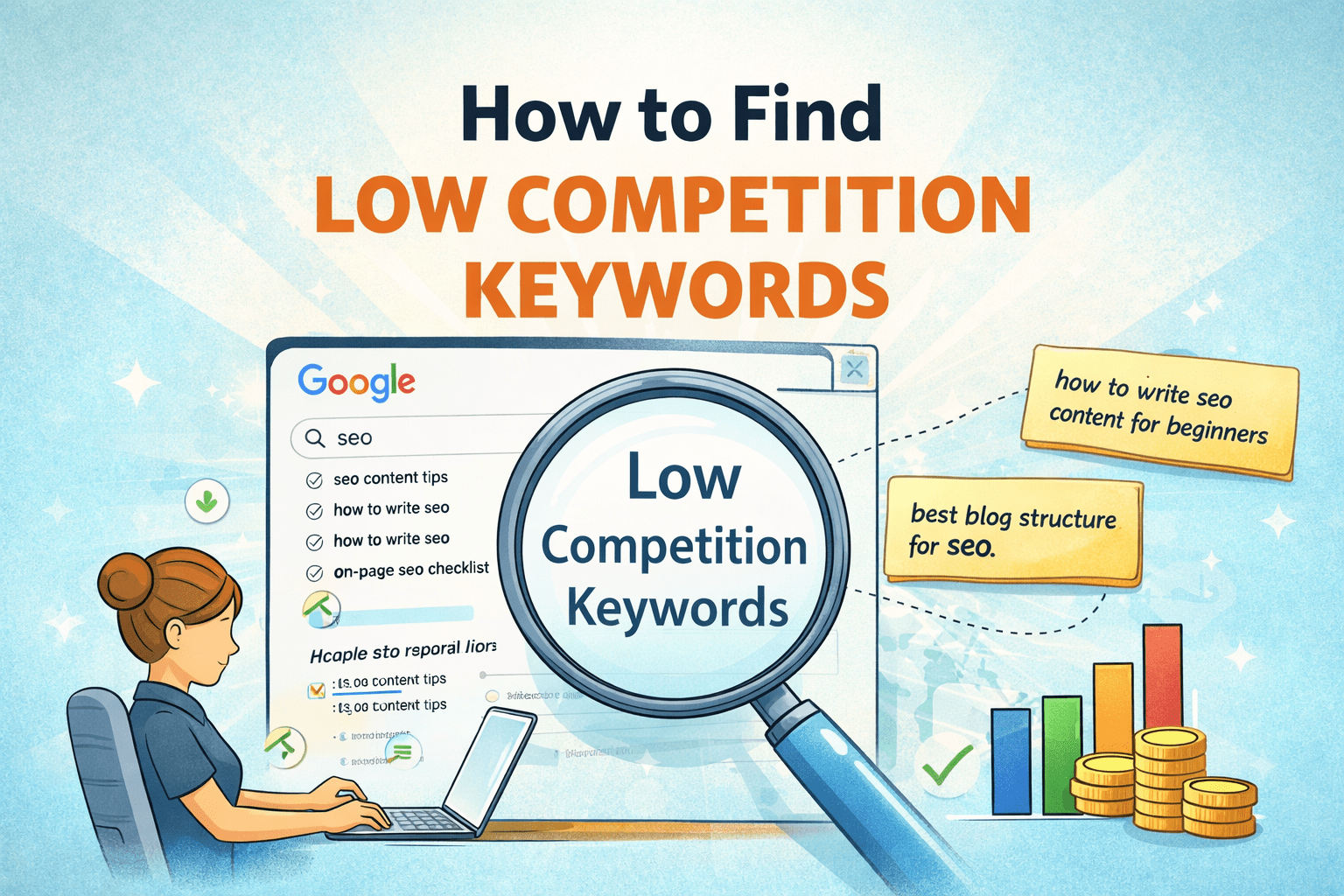
How to Find Low Competition Keywords for New Blogs

If your blog is new, targeting the wrong keywords can slow you down.

Many beginners go after high-volume keywords.

But those are often too competitive.

If you want faster results, you need a different approach.

You need low competition keywords.

If you’re new to SEO, it’s important to understand how search engines actually work before choosing keywords.

Step 1: Start with a Simple Topic

Choose a clear topic related to your niche.

For example:

content writing SEO blogging

Then turn it into a question or specific idea.

Instead of:

“SEO”

Try:

“How to learn SEO for beginners”

Before choosing a topic, you should know how to write SEO content properly so your article can rank.

Step 2: Look for Long-Tail Keywords

Long-tail keywords are longer and more specific.

Examples:

• how to write SEO content for beginners

• best blog structure for SEO

• how to find keywords for a new blog

These keywords:

• Have less competition

• Match search intent better

• Are easier to rank for


How to Find Low Competition Keywords for New Blogs

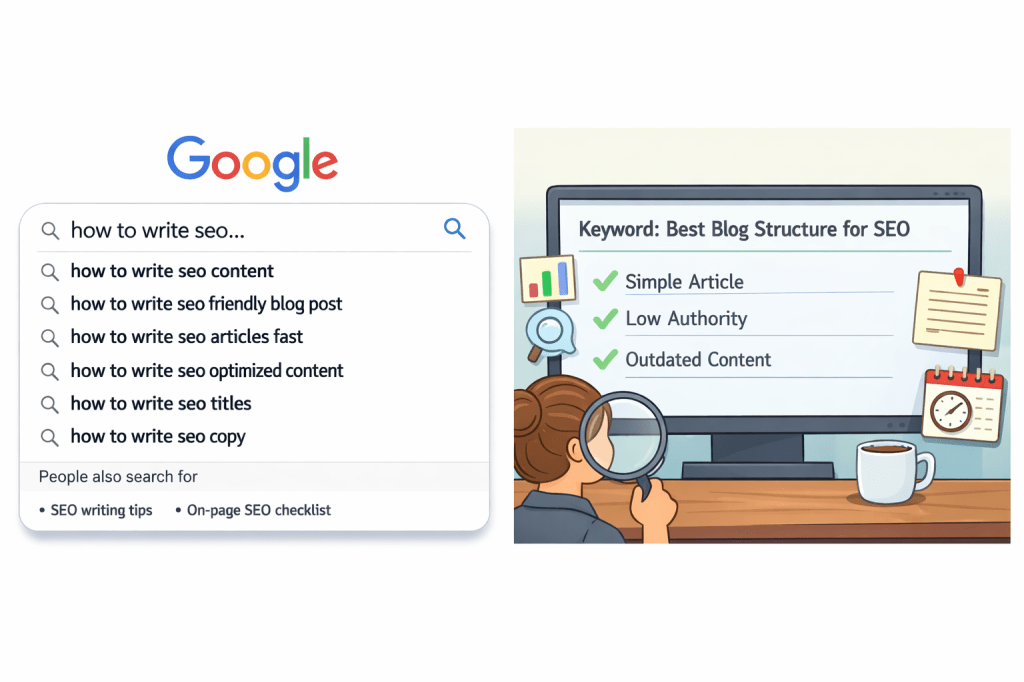
Step 3: Use Google Suggestions

Go to Google and start typing your topic.

You’ll see suggestions like:

• how to write SEO content step by step

• how to write SEO articles fast

These suggestions are real searches.

Use them.

Step 4: Check “People Also Ask”

When you search on Google, you’ll find a section called:

People Also Ask

This section shows real questions people search for.

You can turn each question into:

• a section in your article

• or a full article

Step 5: Choose Keywords with Clear Intent

Not all keywords are equal.

Focus on keywords where users want:

• answers

• guides

• steps

Avoid keywords that are too broad.

Step 6: Analyze Simple Competitors

Search your keyword on Google.

Look at the first page.

Ask:

• Are the articles simple?

• Are they outdated?

• Can I write something better?

If yes → this is a good keyword.

Common Mistakes to Avoid

Many beginners:

• Target very competitive keywords

• Ignore search intent

• Write without a clear structure

Many beginners make mistakes that hurt their rankings. You can read more about these in common content writing mistakes that kill your rankings.

Avoid these, and your chances improve.

Low competition keywords are the fastest way to grow a new blog.

You don’t need to compete with big websites from day one.

Start small.

Rank faster.

Build authority over time.

How Search Engines Work: Crawling, Indexing, and Ranking Explained

Every time you search on Google, you get thousands of results in seconds.

But have you ever wondered how search engines actually find and organize all that information?

Search engines follow a process to discover websites, understand their content, and decide which pages appear first in search results.

In this guide, you’ll learn how search engines work and how your content can become part of those results.

What Is a Search Engine?

A search engine is a tool that helps people find information on the internet.

Instead of visiting hundreds of websites, you can type a question or keyword and instantly get relevant results.

The most well-known example is Google, but other search engines include Bing, Yahoo, and DuckDuckGo.

Their main goal is simple:

to show users the most helpful and relevant content for their search.

The Three Main Steps of Search Engines

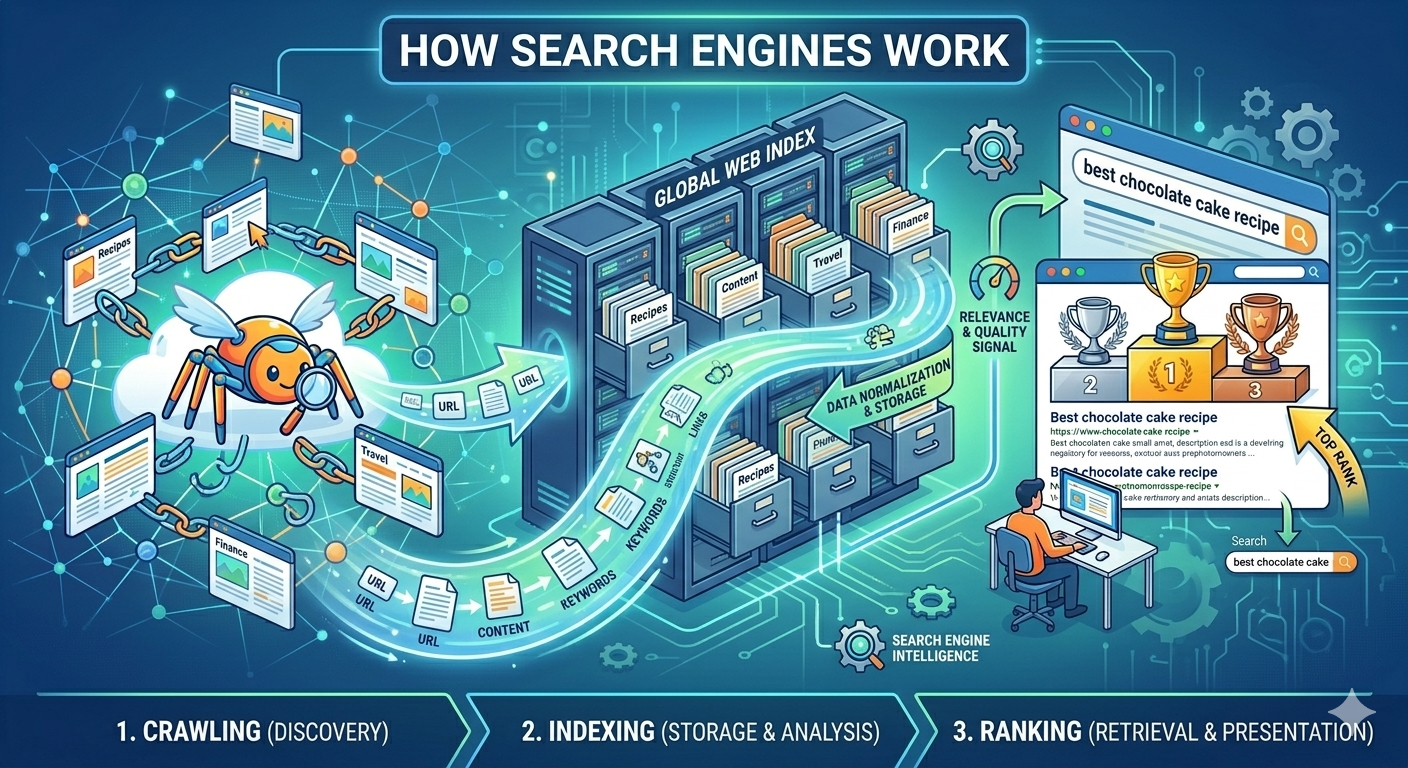
Search engines work through three main processes:

Crawling Indexing Ranking

These steps allow search engines to discover websites and decide which pages appear in search results.

1. Crawling: Discovering New Pages

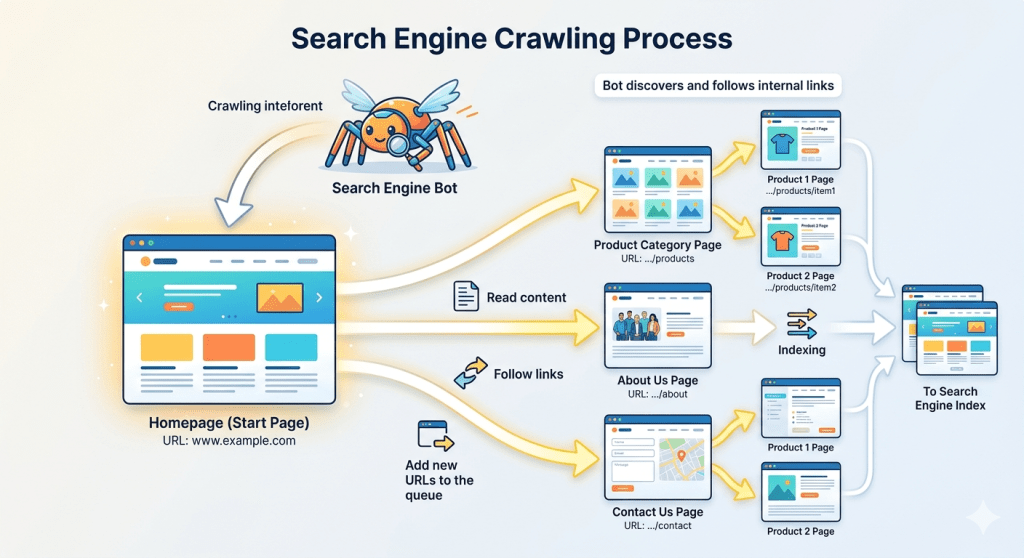
Crawling is the first step.

Search engines use automated programs called bots or spiders to explore the internet. These bots move from one webpage to another by following links.

When they visit a page, they collect information such as:

Page content Images Links Page structure

If your website is new, it may take time for search engines to find it. However, internal links and sitemaps can help search engines discover your pages faster.


Search Engine Crawling Process

2. Indexing: Storing Information

After a page is crawled, the search engine tries to understand what the page is about.

This process is called indexing.

Search engines analyze the content and store it in a massive database called an index.

During indexing, search engines examine things like:

Keywords and topics Page titles and headings Images and alt text Content quality

If a page meets quality guidelines, it becomes eligible to appear in search results.

3. Ranking: Choosing the Best Results

Ranking is the final step.

When someone performs a search, the search engine scans its index and chooses the pages that best match the query.

Then it ranks them based on many factors, including:

Content relevance Website authority User experience Page speed Mobile friendliness

Pages that provide clear, helpful information are more likely to rank higher.


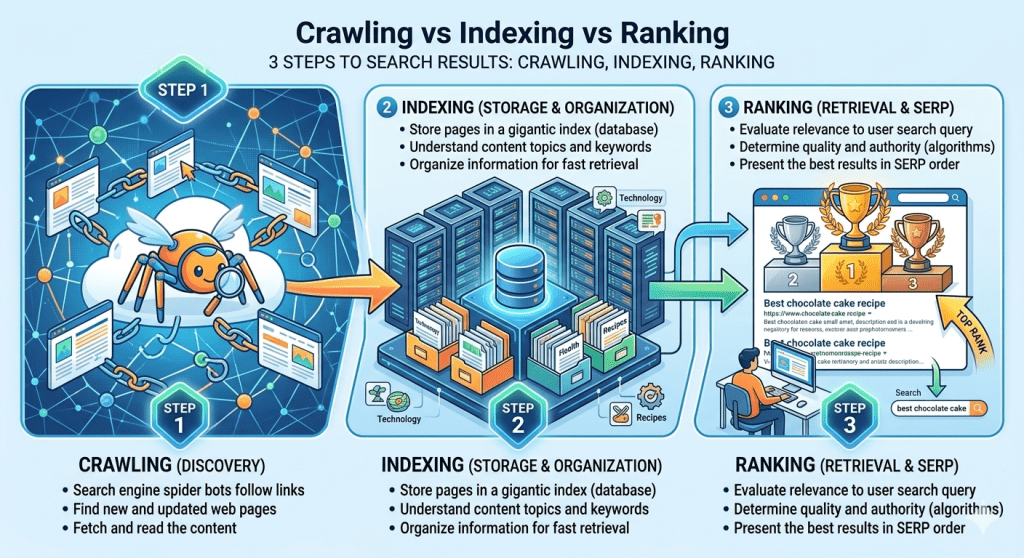
Crawling vs Indexing vs Ranking

Why SEO Matters

Search Engine Optimization (SEO) helps search engines understand your content.

When you optimize your website, you make it easier for search engines to crawl, index, and rank your pages.

Some basic SEO practices include:

Using clear keywords Writing helpful content Adding internal links Optimizing page titles and descriptions

These steps improve the chances of your content appearing in search results.

How Long Does It Take to Rank on Google?

SEO does not produce instant results.

New websites often need time before search engines trust them. It can take several weeks or even months for pages to rank.

Consistency matters.

Publishing useful content regularly helps search engines see your site as a reliable source of information.

Search engines may seem complex, but their goal is simple:

to connect users with the most useful content available online.

Understanding how crawling, indexing, and ranking work can help you create better content and improve your visibility in search results.

If you focus on clear, helpful information, search engines will have a much easier time discovering and ranking your pages.