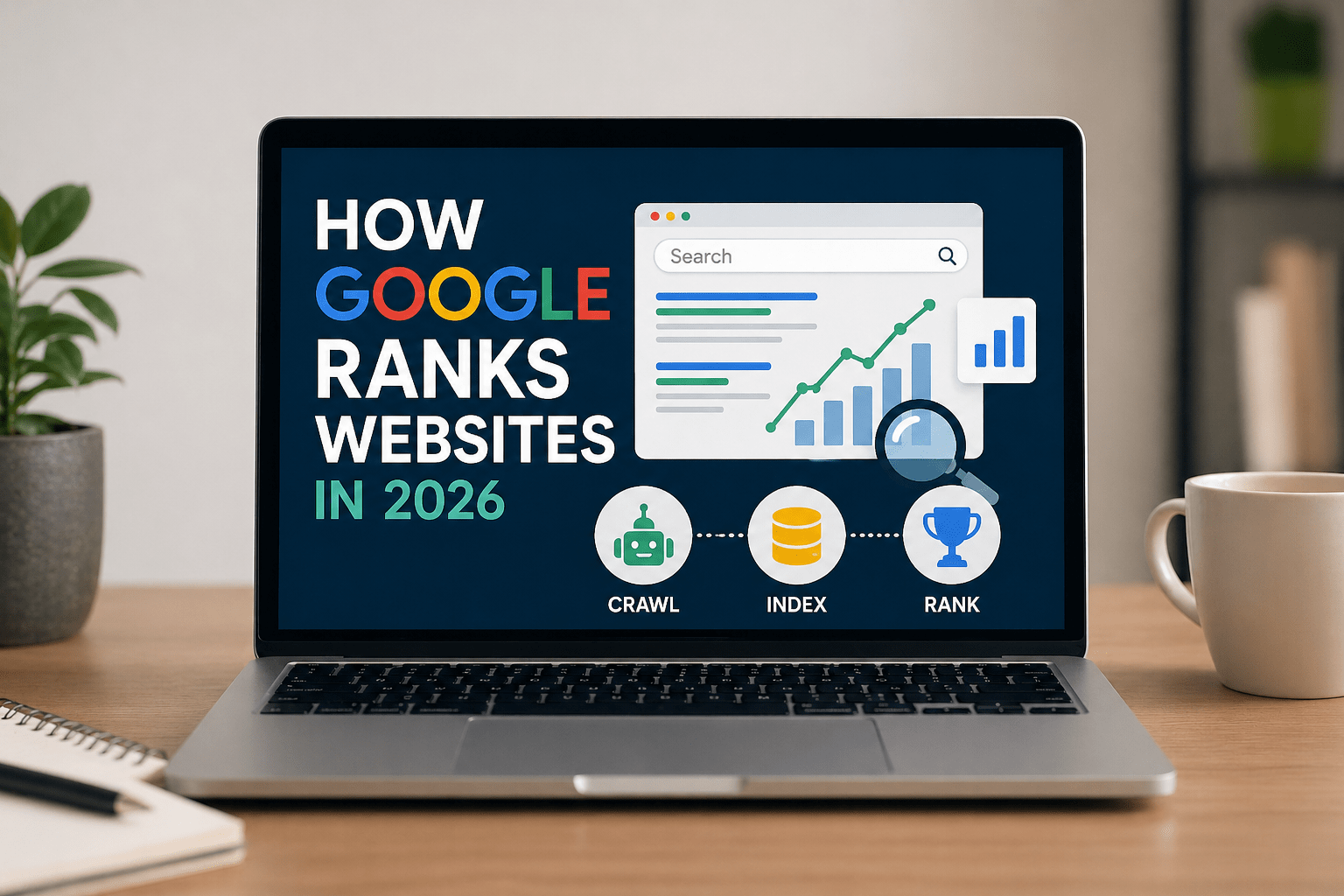
You can write a great article… and still get zero traffic.
That’s the part most beginners don’t expect.
Ranking on Google isn’t just about writing. It’s about how your content is discovered, understood, and trusted.
If you want your website to appear in search results, you need to understand what’s happening behind the scenes.
How Google Really Finds Your Content
Before your article can rank, Google needs to know it exists.
It uses automated bots to scan websites and follow links from one page to another.
If your content isn’t linked properly, it might stay invisible longer than you expect.
That’s why internal linking is not optional — it’s essential.
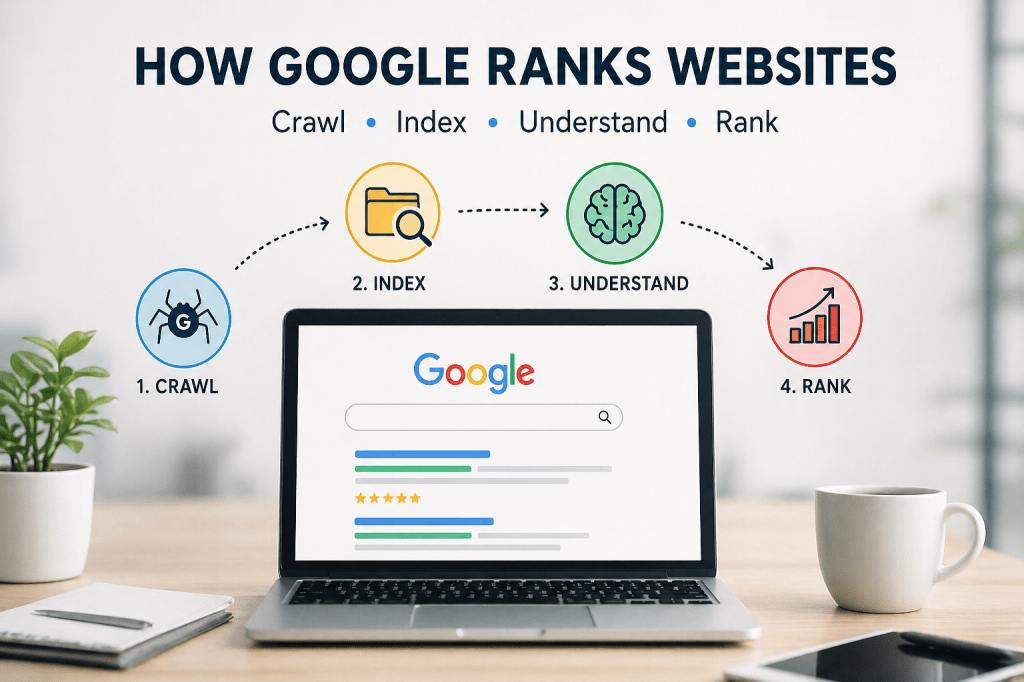
How Google Ranks Websites in 2026: What Actually Matters
Why Indexing Is Where Most New Sites Fail
Getting crawled doesn’t mean getting indexed.
Google reviews your page and decides if it’s worth storing in its system.
If your content is:
- too short
- unclear
- or similar to other pages
…it may not be indexed at all.
And if it’s not indexed, it simply won’t show up.
Understanding What Your Content Is Really About
Google no longer relies on keywords alone.
It tries to understand the purpose of your page.
Ask yourself:
- Who is this for?
- What problem does it solve?
- Is the answer clear and complete?
If your content doesn’t match what people are searching for, it won’t rank — even if it’s well written.
What Actually Affects Your Ranking Today
Content That Solves a Problem
Your article should answer a real question.
Not just explain a topic, but help the reader move forward.
Clear Structure
Messy content is hard to understand.
Use:
- short paragraphs
- clear headings
- simple language
This makes it easier for both readers and search engines.
Trust and Credibility
Google prefers content that feels reliable.
This comes from:
- consistency
- accuracy
- clear writing
Over time, your site builds trust.
Google evaluates trust using concepts like E-E-A-T, which you can understand in this guide.
User Experience
If your site is slow or hard to read, people leave.
That sends a signal to Google that your page isn’t helpful.
Why New Websites Struggle to Rank
This is something many people don’t talk about.
Even if your content is good, new websites need time.
Google needs to:
- discover your pages
- understand your content
- trust your site
This doesn’t happen overnight.
Common Mistakes That Hurt Your Rankings
A lot of beginners make the same mistakes:
- Writing without a clear goal
- Ignoring internal linking
- Targeting very competitive keywords
- Publishing inconsistent content
Fixing these alone can make a big difference.
How to Improve Your Chances of Ranking
You don’t need complicated strategies.
Focus on the basics:
- Write content that answers real questions
- Keep your structure clean
- Link your articles together
- Stay consistent
Small improvements add up over time.
Google ranking isn’t random.
It’s a process.
When your content is clear, useful, and connected, it becomes easier for search engines to understand and rank it.
Start simple. Stay consistent.
That’s how growth happens.

 IContent Hub