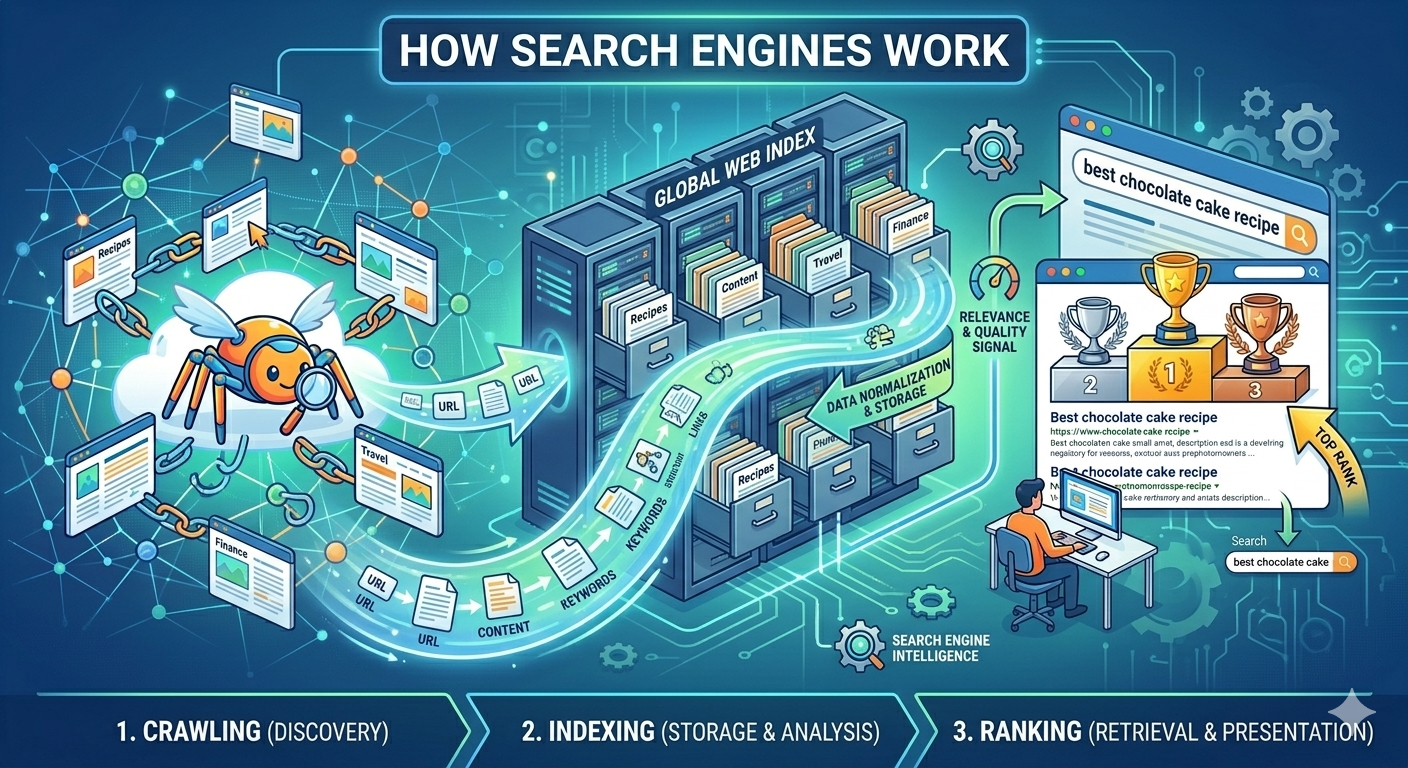
Every time you search on Google, you get thousands of results in seconds.
But have you ever wondered how search engines actually find and organize all that information?
Search engines follow a process to discover websites, understand their content, and decide which pages appear first in search results.
In this guide, you’ll learn how search engines work and how your content can become part of those results.
What Is a Search Engine?
A search engine is a tool that helps people find information on the internet.
Instead of visiting hundreds of websites, you can type a question or keyword and instantly get relevant results.
The most well-known example is Google, but other search engines include Bing, Yahoo, and DuckDuckGo.
Their main goal is simple:
to show users the most helpful and relevant content for their search.
The Three Main Steps of Search Engines
Search engines work through three main processes:
Crawling Indexing Ranking
These steps allow search engines to discover websites and decide which pages appear in search results.
1. Crawling: Discovering New Pages
Crawling is the first step.
Search engines use automated programs called bots or spiders to explore the internet. These bots move from one webpage to another by following links.
When they visit a page, they collect information such as:
Page content Images Links Page structure
If your website is new, it may take time for search engines to find it. However, internal links and sitemaps can help search engines discover your pages faster.
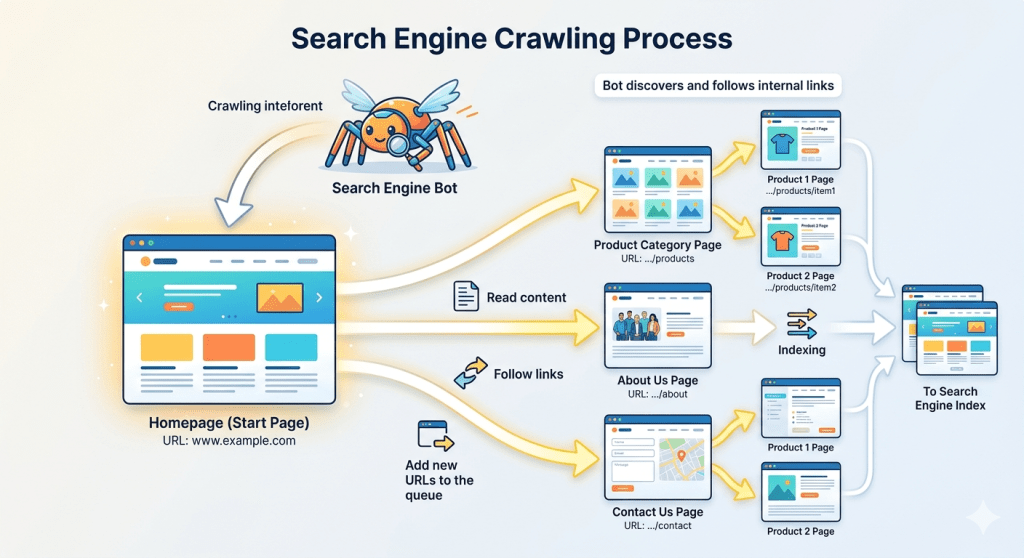
Search Engine Crawling Process
2. Indexing: Storing Information
After a page is crawled, the search engine tries to understand what the page is about.
This process is called indexing.
Search engines analyze the content and store it in a massive database called an index.
During indexing, search engines examine things like:
Keywords and topics Page titles and headings Images and alt text Content quality
If a page meets quality guidelines, it becomes eligible to appear in search results.
3. Ranking: Choosing the Best Results
Ranking is the final step.
When someone performs a search, the search engine scans its index and chooses the pages that best match the query.
Then it ranks them based on many factors, including:
Content relevance Website authority User experience Page speed Mobile friendliness
Pages that provide clear, helpful information are more likely to rank higher.
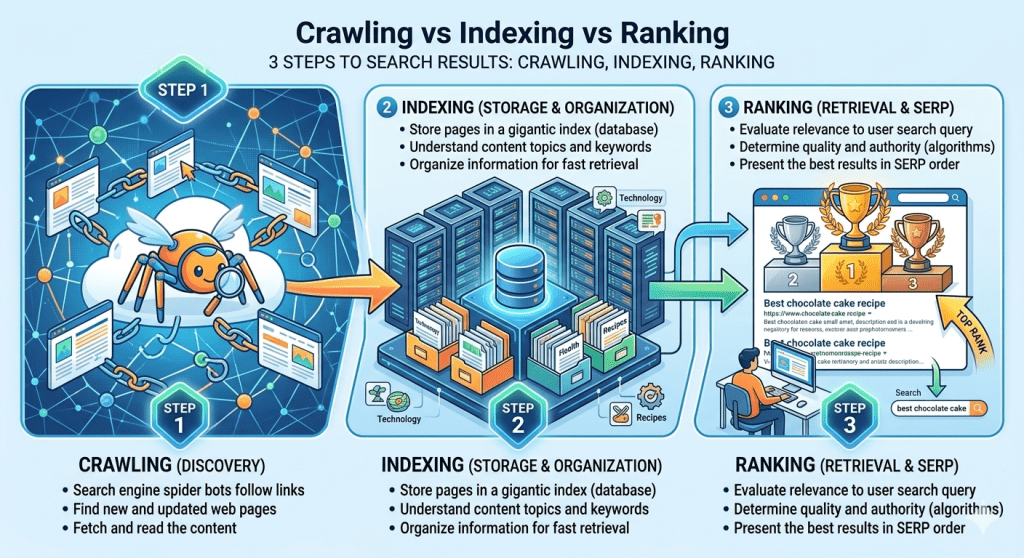
Crawling vs Indexing vs Ranking
Why SEO Matters
Search Engine Optimization (SEO) helps search engines understand your content.
When you optimize your website, you make it easier for search engines to crawl, index, and rank your pages.
Some basic SEO practices include:
Using clear keywords Writing helpful content Adding internal links Optimizing page titles and descriptions
These steps improve the chances of your content appearing in search results.
How Long Does It Take to Rank on Google?
SEO does not produce instant results.
New websites often need time before search engines trust them. It can take several weeks or even months for pages to rank.
Consistency matters.
Publishing useful content regularly helps search engines see your site as a reliable source of information.
Search engines may seem complex, but their goal is simple:
to connect users with the most useful content available online.
Understanding how crawling, indexing, and ranking work can help you create better content and improve your visibility in search results.
If you focus on clear, helpful information, search engines will have a much easier time discovering and ranking your pages.



 IContent Hub