
If your blog is new, targeting the wrong keywords can slow you down.
Many beginners go after high-volume keywords.
But those are often too competitive.
If you want faster results, you need a different approach.
You need low competition keywords.
Step 1: Start with a Simple Topic
Choose a clear topic related to your niche.
For example:
content writing SEO blogging
Then turn it into a question or specific idea.
Instead of:
“SEO”
Try:
“How to learn SEO for beginners”
Before choosing a topic, you should know how to write SEO content properly so your article can rank.
Step 2: Look for Long-Tail Keywords
Long-tail keywords are longer and more specific.
Examples:
• how to write SEO content for beginners
• best blog structure for SEO
• how to find keywords for a new blog
These keywords:
• Have less competition
• Match search intent better
• Are easier to rank for
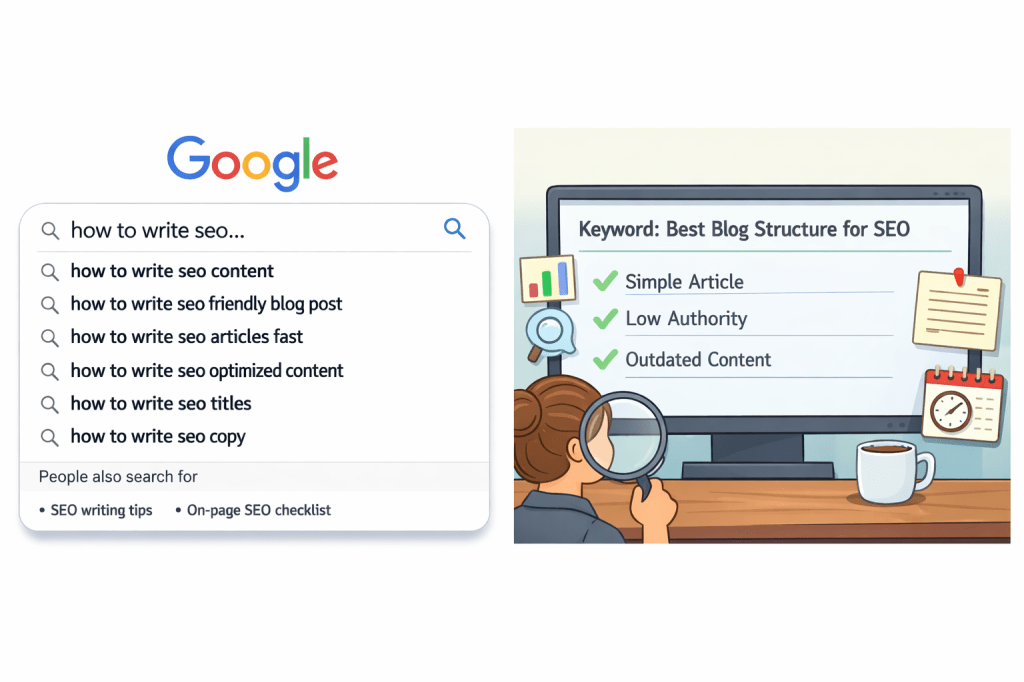
How to Find Low Competition Keywords for New Blogs
Step 3: Use Google Suggestions
Go to Google and start typing your topic.
You’ll see suggestions like:
• how to write SEO content step by step
• how to write SEO articles fast
These suggestions are real searches.
Use them.
Step 4: Check “People Also Ask”
When you search on Google, you’ll find a section called:
People Also Ask
This section shows real questions people search for.
You can turn each question into:
• a section in your article
• or a full article
Step 5: Choose Keywords with Clear Intent
Not all keywords are equal.
Focus on keywords where users want:
• answers
• guides
• steps
Avoid keywords that are too broad.
Step 6: Analyze Simple Competitors
Search your keyword on Google.
Look at the first page.
Ask:
• Are the articles simple?
• Are they outdated?
• Can I write something better?
If yes → this is a good keyword.
Common Mistakes to Avoid
Many beginners:
• Target very competitive keywords
• Ignore search intent
• Write without a clear structure
Avoid these, and your chances improve.
Low competition keywords are the fastest way to grow a new blog.
You don’t need to compete with big websites from day one.
Start small.
Rank faster.
Build authority over time.

 IContent Hub