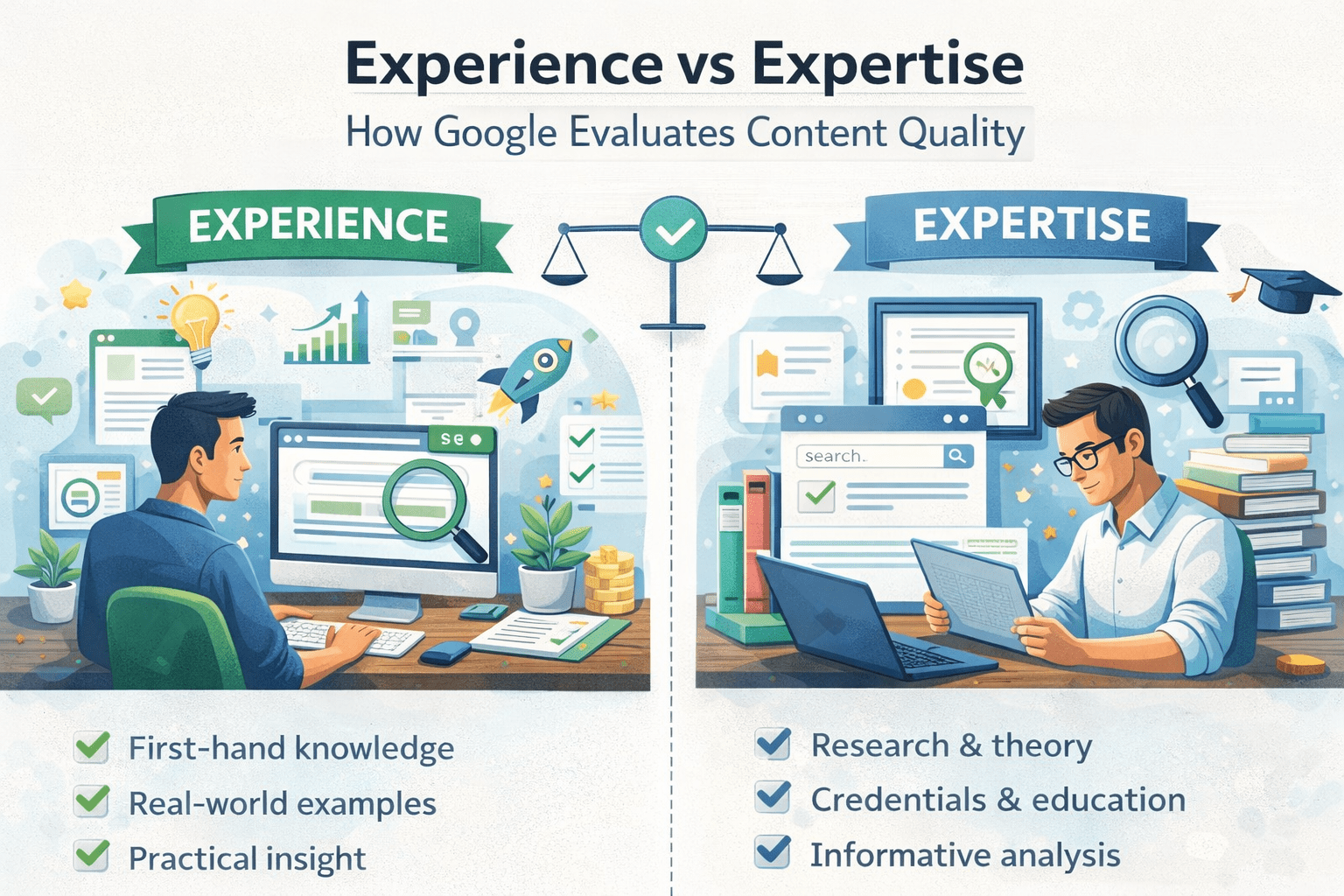
When you publish content online, Google doesn’t only look at accuracy.
It looks at value.
More specifically, it looks at whether your content is written by someone who understands the topic — and someone who has actually dealt with it.
That’s where the difference between experience and expertise matters.
What Is Expertise?
Expertise refers to knowledge and understanding.
This usually comes from:
Study or education Research and analysis Familiarity with best practices
Expertise helps you explain a topic clearly.
It ensures accuracy and structure.
However, expertise alone does not always create helpful content.

Experience vs Expertise: How Google Evaluates Content Quality
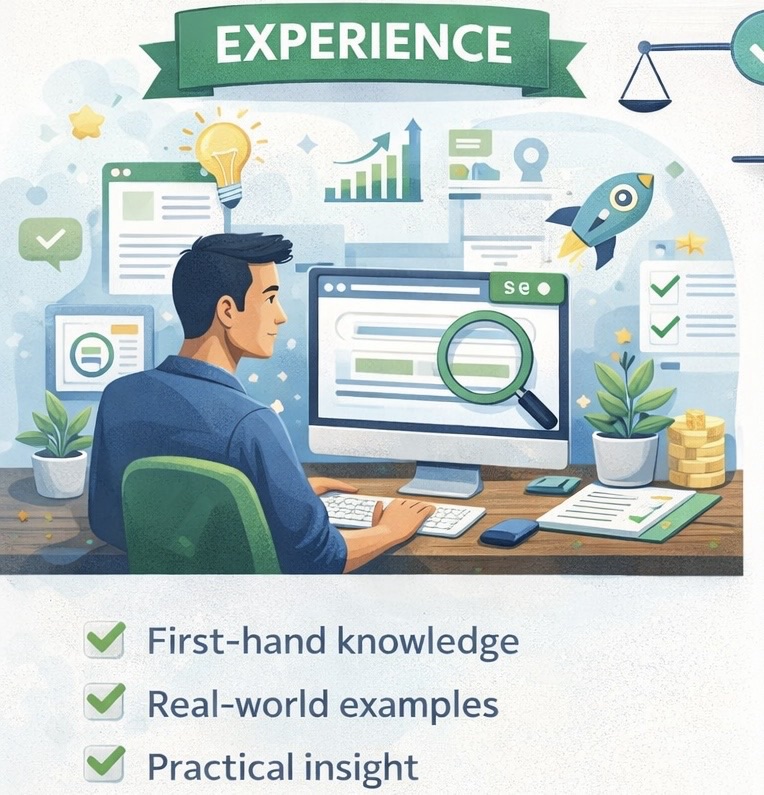
What Is Experience?
Experience comes from real-world involvement.
It means you have:
Applied the information Faced real challenges Learned from actual outcomes
Content written with experience often includes practical details that are missing from purely theoretical explanations.
This type of content tends to be more useful to readers.
Experience vs Expertise: How Google Evaluates Content Quality
Why Google Values Experience
Google’s quality guidelines emphasize content that helps users, not content created just to rank.
Experience helps achieve that because:
It adds original insight It avoids repetition of existing articles It answers real questions users have
This aligns with Google’s focus on helpful and trustworthy content.
How to Reflect Experience in Content
You can demonstrate experience without personal storytelling.
For example:
Explain decisions based on real situations Mention common mistakes and how they’re handled Describe processes you’ve actually used
Clear, practical explanations improve trust and clarity.
Is Experience Required to Rank
Not always.
Well-researched content can still perform well.
However, in competitive topics, experience often helps content stand out and remain relevant longer.
Conclusion
Google evaluates content quality based on usefulness, clarity, and trust.
When content reflects real understanding — whether through experience, expertise, or both — it is more likely to meet those standards.
The strongest content combines accurate knowledge with practical insight, offering readers information they can rely on.

 IContent Hub