Google doesn’t rank content just because it’s well-written. It ranks content it trusts.
Many articles fail not because they’re bad, but because Google doesn’t see them as reliable, helpful, or authoritative enough. That’s where E-E-A-T comes in.
In this article, you’ll learn what makes Google trust your content—and how to apply it practically as a content writer.
What Is E-E-A-T?
E-E-A-T stands for:
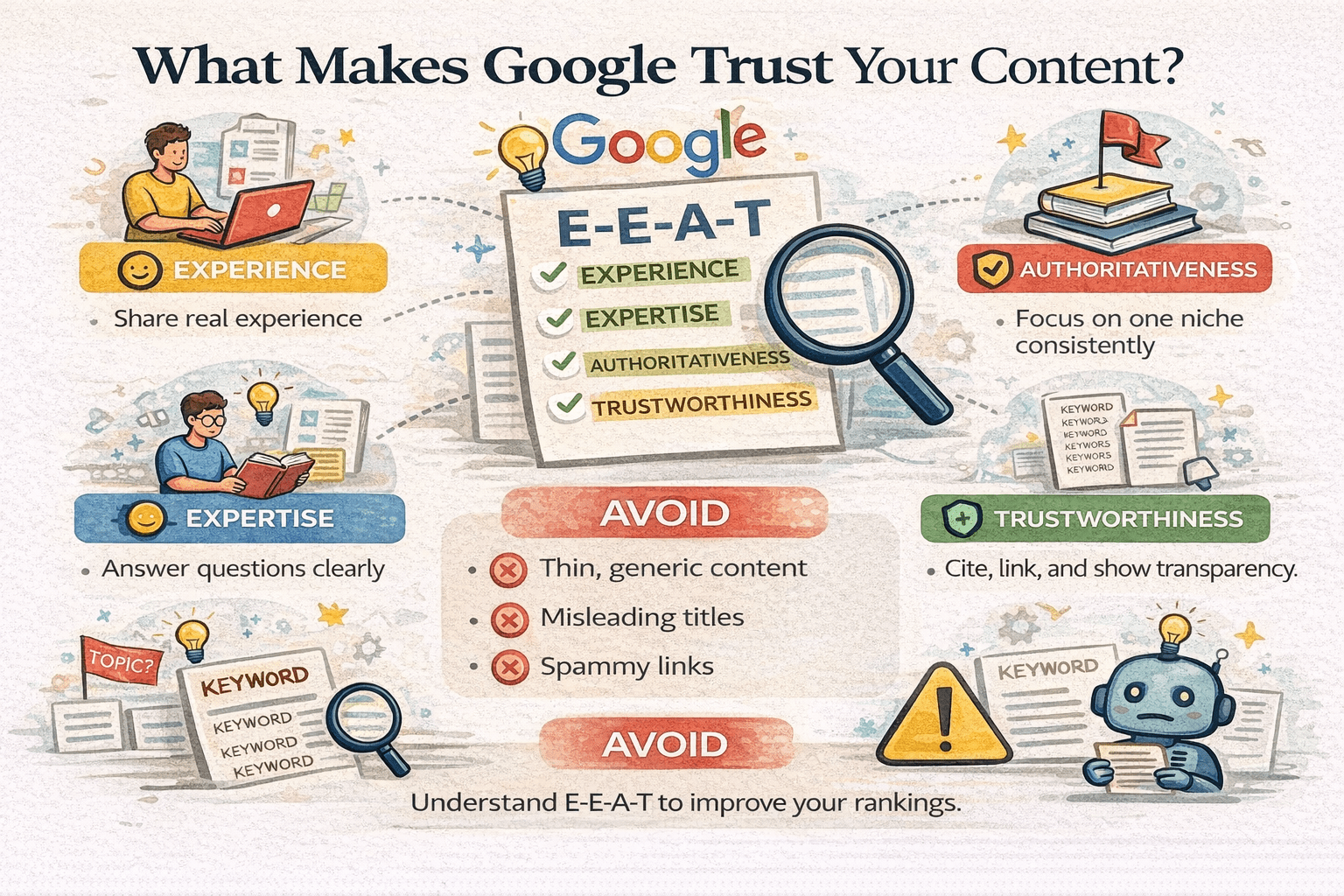
Experience Expertise Authoritativeness Trustworthiness
It’s part of Google’s quality guidelines and plays a major role in how content is evaluated especially blog content.
1. Experience: Show That You’ve Actually Done It
Google prefers content written by people with real experience, not just theory.
For example:
Writing about content writing from actual practice Sharing real observations, mistakes, or workflows
How to apply it:
Use phrases like “In practice”, “From experience” Share real scenarios, not generic advice Avoid robotic, textbook-style writing
Experience builds instant credibility.
2. Expertise: Depth Beats Length
Expertise doesn’t mean using complex language. It means understanding the topic deeply.
Google trusts content that:
Explains why, not just what Covers a topic clearly and logically Answers related questions naturally
How to apply it:
Go beyond surface-level tips Explain concepts in simple language Anticipate reader questions
3. Authoritativeness: Be Consistent, Not Everywhere
Authority isn’t built overnight. It’s built through topic consistency.
A blog that publishes randomly won’t gain authority.
How to apply it:
Focus on a clear niche (content writing, SEO, digital content) Publish related articles Link your articles together internally
Google connects the dots—so should you.
4. Trustworthiness: Clarity Builds Trust
Trust starts with clarity.
Google looks at:
Clear structure Honest, helpful tone No exaggerated claims
How to apply it:
Write clear introductions Use headings and short paragraphs Avoid clickbait or false promises Add Privacy Policy and About pages (important!)
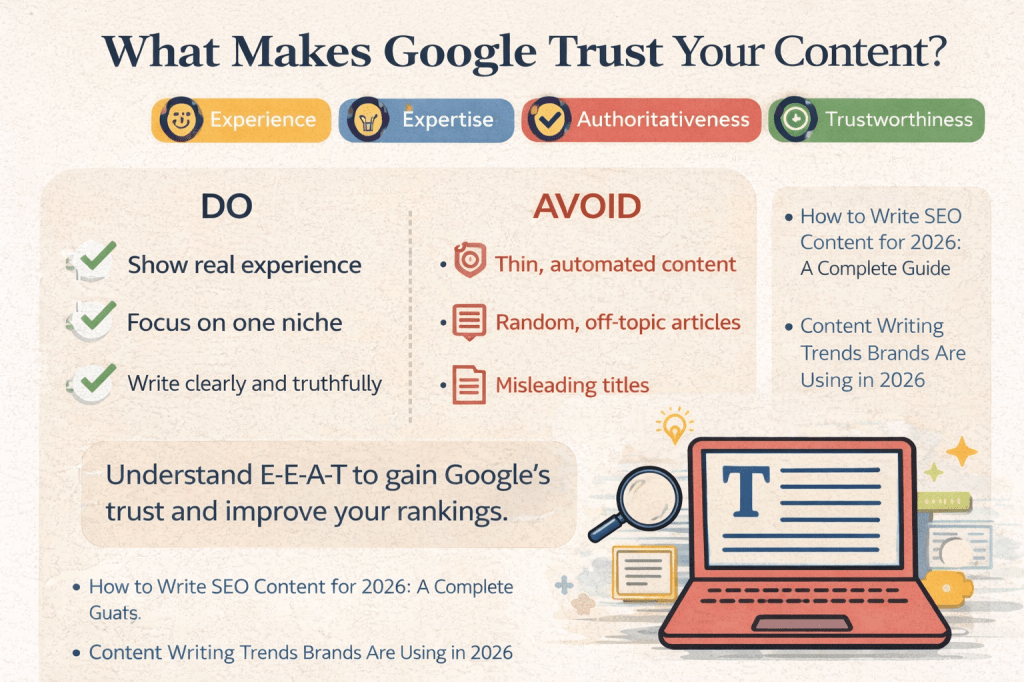
What Makes Google Trust Your Content? (E-E-A-T Explained)
What Google Doesn’t Trust
Avoid these common mistakes:
Thin content written just to rank Keyword stuffing AI-generated content with no editing Misleading titles No internal links or structure
Even good writing can fail if trust signals are missing.
How Content Writers Can Build Google Trust Faster
Write consistently in one niche Update old content regularly Link related articles together Focus on helping readers, not algorithms Be clear, honest, and practical
Trust is built over time—but it starts with one good article.
Google doesn’t reward tricks. It rewards clarity, experience, and usefulness.
When you write content that genuinely helps readers, trust follows—and rankings come naturally.
Strong content isn’t just written.
It’s earned.

 IContent Hub
1 Comment